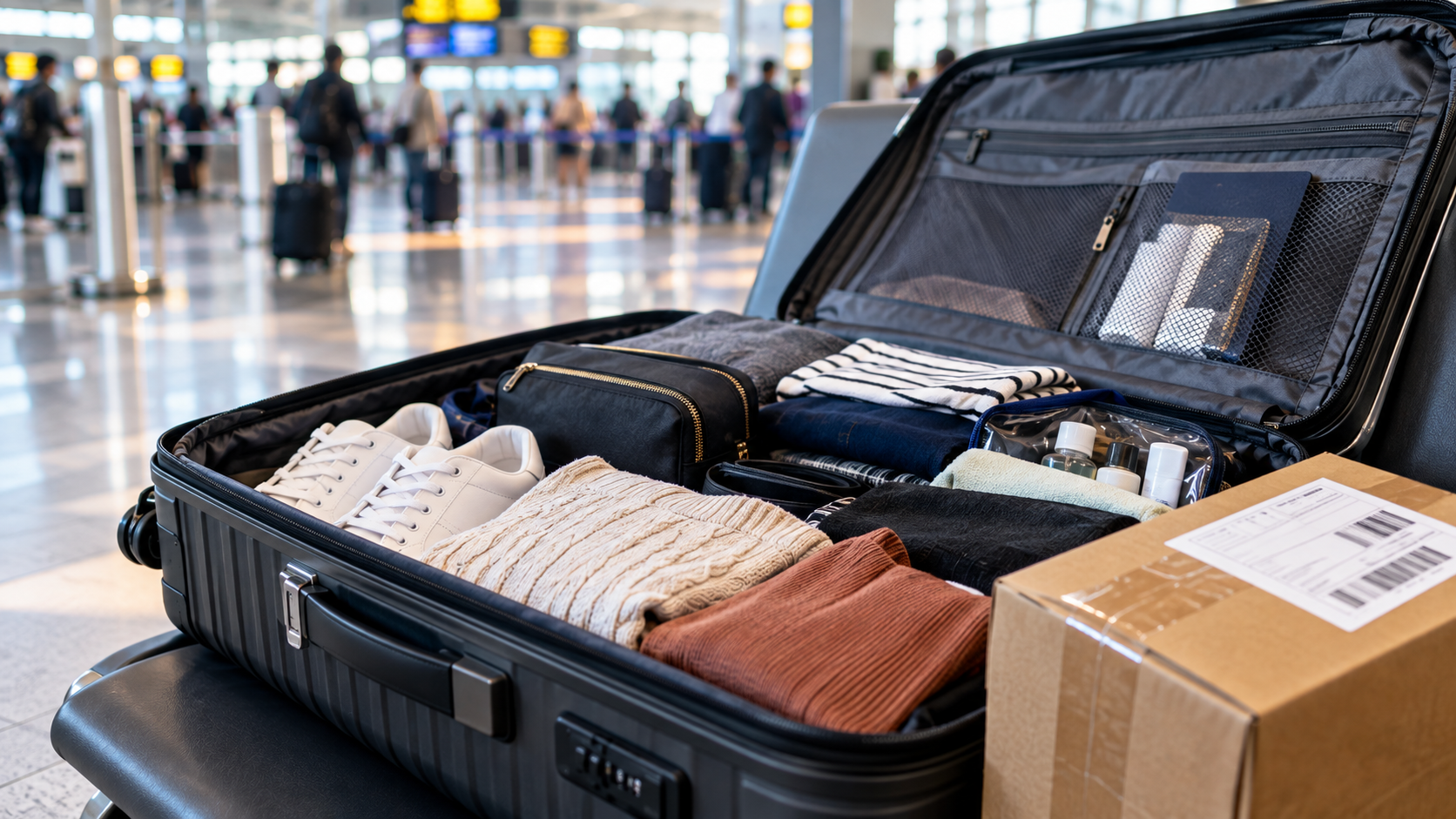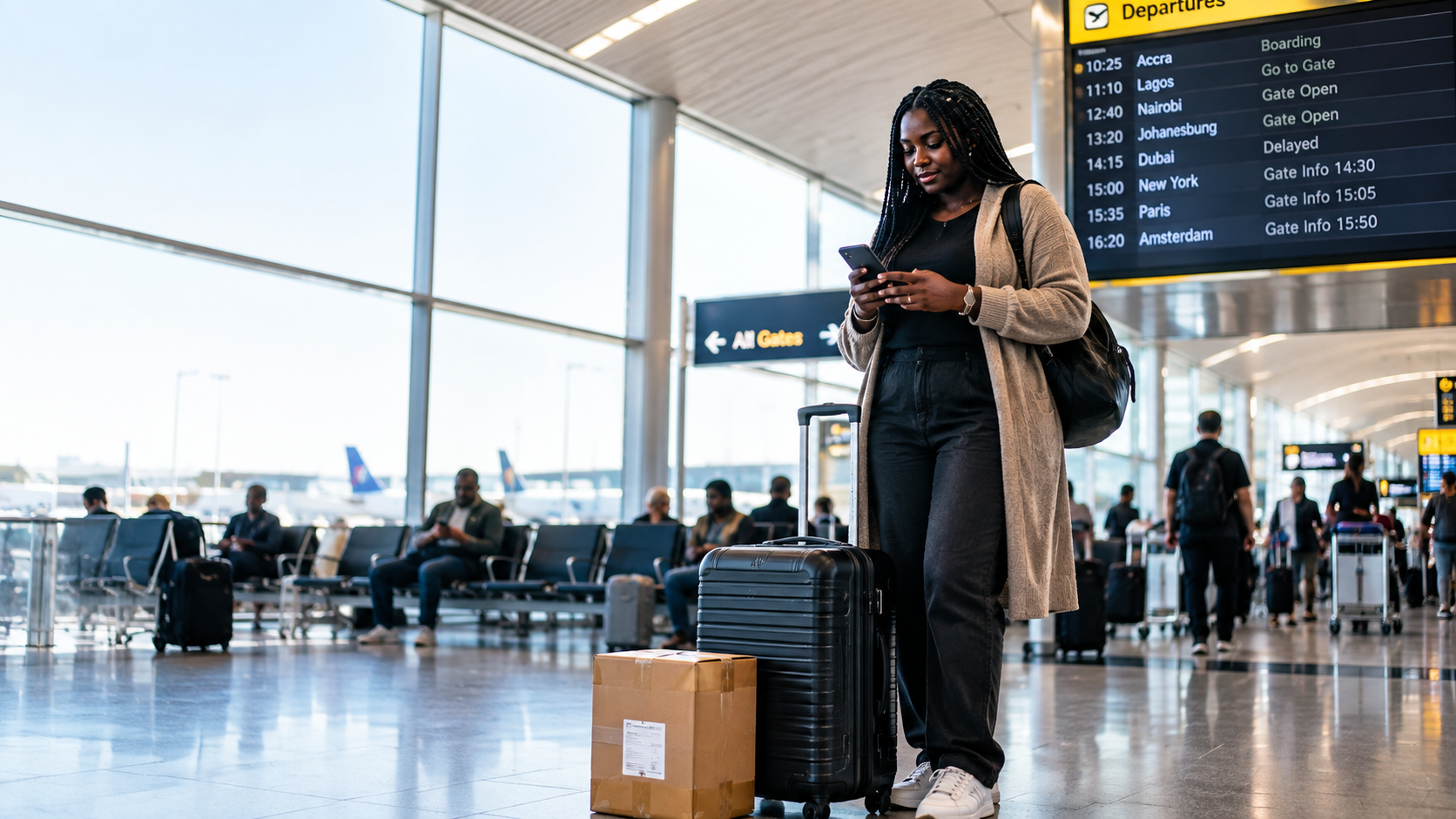
Imagine someone is flying from London to Lagos next week with space left in their luggage. At the same time, someone in London needs to send a small parcel to Lagos. The flight is already happening. The luggage is already travelling. The question is whether that unused capacity can be matched with a parcel going the same way.
That is the basic idea behind traveller-based parcel delivery. Instead of searching only for a courier or cargo company, a sender can also explore whether an independent traveller is already making the journey.
It is not a solution for every parcel. Airline rules, security requirements, customs rules and the traveller’s own baggage allowance still apply. But for eligible items, it can create another option worth exploring.
What is traveller-based parcel delivery?
Traveller-based delivery connects a sender with an independent traveller who is already travelling to the parcel’s destination. The traveller may have unused luggage capacity and may agree to carry an eligible parcel as part of their journey.
The traveller is not acting as a traditional courier company. They are already making the trip. The marketplace simply helps make that existing journey visible to someone who needs a parcel to move on the same route.
Why unused luggage space matters
A passenger can have a suitcase that is not completely full, yet that unused capacity is travelling with them anyway. A marketplace can help connect that available capacity with a sender whose parcel fits the journey.
The bigger idea is capacity matching: rather than creating a completely new transport journey for every parcel, use suitable journeys that are already taking place.
How does the process work?
The traveller shares the journey. They provide their departure city, destination, travel date and the type or amount of parcel capacity they are willing to consider.
The sender describes the parcel. They provide the destination, contents, weight, dimensions and preferred timing. Accurate information allows the traveller to understand exactly what they may be carrying.
The route and parcel are matched. The sender explores available traveller options that fit the route and timing. The details are discussed. Before agreeing, both sides confirm the price, handover arrangements, recipient details and any other practical requirements.
The parcel is checked. The traveller confirms that the item is permitted for the specific journey and that it can be carried safely within the applicable baggage and security rules.
The handover takes place. The sender and traveller follow the agreed time and location, keeping a record of the arrangement.
The traveller completes the journey and the recipient receives the parcel according to the agreed delivery arrangement.
What makes a good traveller-delivery match?
A strong match is more than two people travelling to or sending to the same country. The parcel should fit the traveller’s available capacity, the timing should work, and the item must be acceptable for the journey. The following can constitute what might be considered a good traveller-delivery match:
- Same or compatible route
- Travel date that fits the sender’s timing
- Parcel size and weight that fit the available capacity
- Contents that are permitted
- Clear handover arrangements
- Agreed price and payment process
- Reliable communication between sender, traveller and recipient
Is traveller delivery the same as using a courier?
No. A courier or logistics company operates a delivery service. A traveller is an individual who is already making a journey and may use available luggage capacity to carry an eligible parcel.
That difference is important. A traveller may be useful for a small eligible parcel that fits an existing trip, while a logistics provider may be more suitable for larger shipments, business consignments or situations requiring a defined collection and delivery service.
Does traveller delivery always cost less?
Not necessarily. The cost depends on the route, parcel size and weight, available capacity, timing and the arrangement agreed between the sender and traveller.
The useful comparison is not simply traveller versus courier. It is whether the option gives you the right combination of price, timing, route, trust and delivery arrangement.
How Parcsal makes the matching easier
Parcsal brings senders and independent travellers together within a cross-border logistics marketplace. Instead of relying entirely on personal contacts or asking in WhatsApp groups whether someone is travelling next week, users can start with their route, parcel details and preferred timing.
For senders, traveller capacity becomes another option to explore alongside logistics carriers. For travellers, it creates a way to make their journey and available capacity visible to people who may need it.
Parcsal does not physically carry every parcel. Its role is to help participants discover suitable options, compare details, communicate, book and manage the delivery journey through the marketplace.
Before you agree to a traveller match
Before you agree to a traveller match, ensure the following:
- The traveller’s departure and destination are clear.
- The travel date and expected arrival are understood.
- The parcel contents have been described accurately.
- The item is permitted for the specific journey.
- The price and payment arrangements are agreed.
- The handover location and time are confirmed.
- The recipient’s name and contact details are correct.
Frequently asked questions
Can anyone become a traveller on Parcsal?
Travellers must meet the marketplace requirements and should only offer journeys they can complete safely and lawfully. The route, item and applicable travel rules still determine what can be carried.
Can a traveller carry any parcel that fits in their suitcase?
No. Space alone is not enough. The item must also comply with airline, security and destination-country requirements.
How do I find a traveller going to my destination?
On Parcsal, enter your shipment details and explore available delivery options, including independent travellers and logistics providers operating on relevant routes.
Should I choose a traveller simply because the price is lower?
Not automatically. Consider the route, timing, item restrictions, handover arrangements, communication and what happens if the journey changes.
Ready to explore a different way to send?
Start with your route, parcel details and preferred timing. Parcsal helps you discover delivery options from independent travellers and logistics carriers, so you can compare what fits your needs.