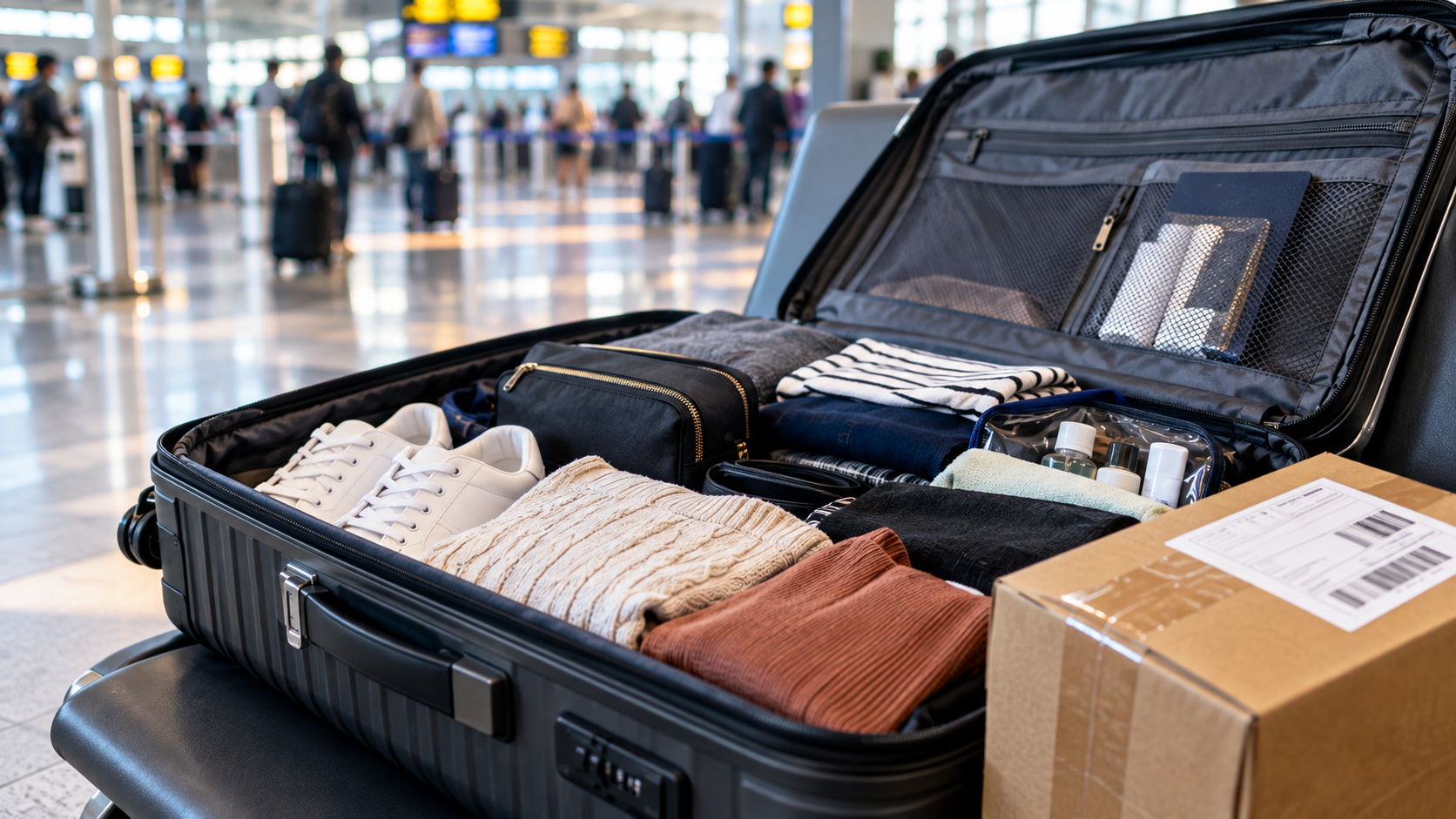
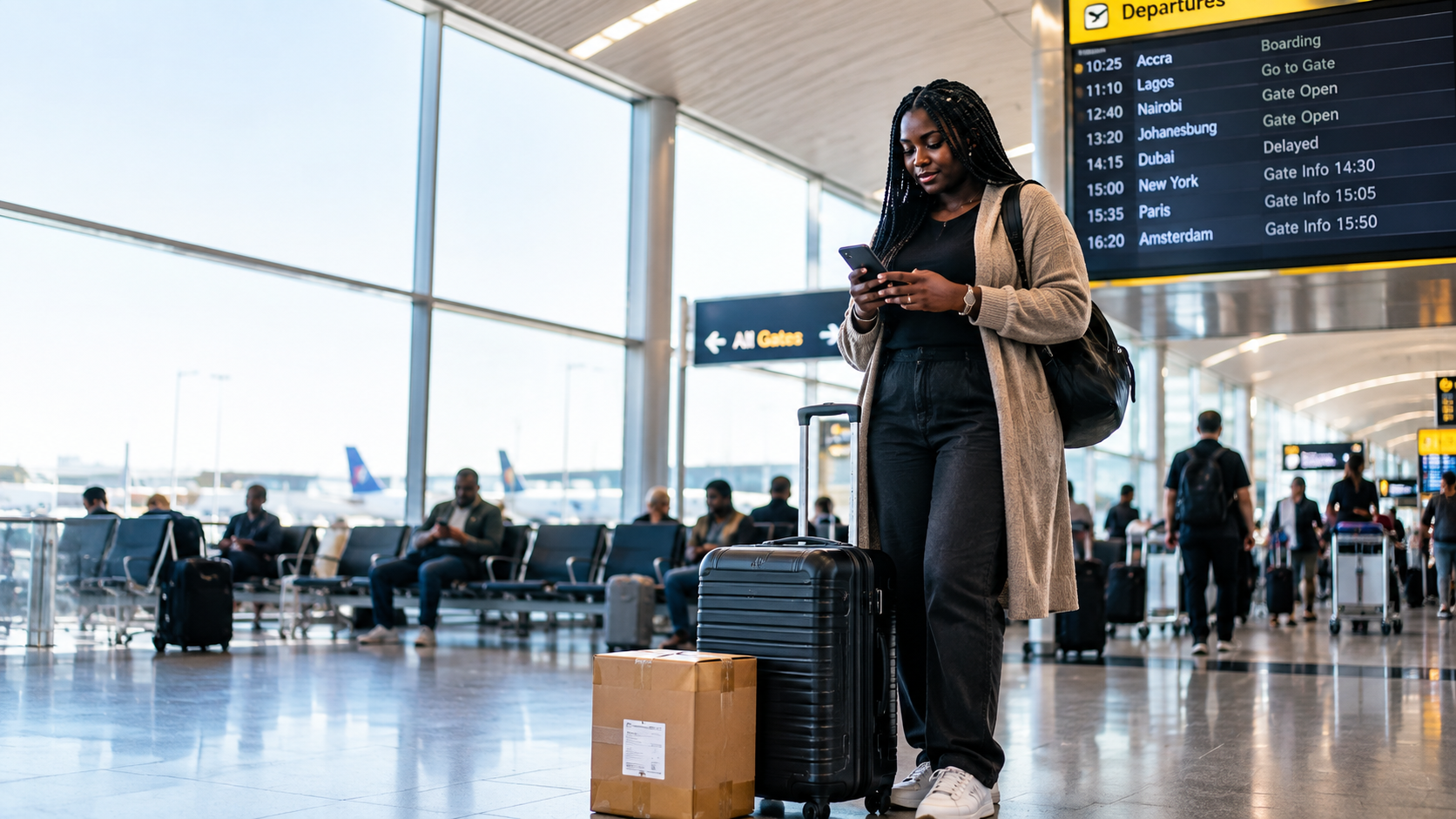
Sending a parcel home should feel straightforward. You pack the item, choose a delivery option and wait for it to arrive. In reality, many senders spend hours asking friends for recommendations, messaging different couriers and trying to understand prices that are difficult to compare.
Whether you are sending clothes from London to Lagos, documents from Paris to Dakar or gifts to family in Accra, a little preparation can save you time, money and stress. This guide explains what to do before you book and how to choose an option that suits your parcel.
Before you start: gather the important details
A delivery provider or traveller cannot give you a reliable answer without knowing what you are sending and where it is going. Before asking for a quote, prepare the following information:
- The city and country where the parcel will be collected.
- The destination city and country.
- A clear description of every item inside the parcel.
- The parcel’s approximate weight and dimensions.
- The date by which you would like it to arrive.
- Whether you need collection, drop-off or doorstep delivery.
Be specific about the contents
Instead of writing “clothes”, say “two cotton shirts, one pair of jeans and a pair of trainers”. Clear descriptions help providers check whether the items are accepted and what customs information may be needed.
Six steps to sending your parcel
- Know exactly what you are sending. Make a simple list of the contents. Do not hide or misdescribe an item. Food, medicines, liquids, batteries, cash and valuable goods may be restricted or may require special handling.
- Pack and measure the parcel. Use suitable packaging and weigh the parcel after it is packed. Measure its length, width and height. A provider may charge according to actual weight or the amount of space the parcel takes up.
- Decide how quickly it needs to arrive. An urgent document and a box of household items do not need the same service. Faster delivery normally costs more, while sea or consolidated cargo may suit larger, less urgent shipments.
- Compare the complete service. Do not compare price alone. Check the route, expected delivery time, collection arrangements, final delivery method, tracking or updates, and what support is available if something changes.
- Confirm customs and item restrictions. Ask whether your parcel needs a declaration, invoice, proof of value or other information. The exact rules depend on the destination, transport method and contents.
- Keep proof of the booking and handover. Save the booking details, messages, payment record and proof that the parcel was handed over. Make sure the recipient’s full name, address and phone number are correct.
Which delivery option should you choose?
There is no single best delivery method for every parcel. The right choice depends on the contents, size, destination, urgency and budget.
Courier or logistics company
This may suit senders who want an established service, defined processes and regular routes. Check what the quoted price includes and whether collection and final delivery are included.
Air cargo or air freight
Air delivery is often suitable for smaller or time-sensitive shipments. It can be faster, but weight and size can make it more expensive.
Sea cargo
Sea cargo may be better for large boxes, household goods or business stock that is not urgent. Delivery usually takes longer, so ask for a realistic timeframe before booking.
Independent traveller
A traveller already flying to the destination may have available luggage capacity. This can be useful on some routes, but you should still confirm the item is permitted, agree the handover arrangements and keep communication and payment information clear.
Why comparison matters?
Two quotes may look different because they cover different services. One may include collection and doorstep delivery, while another only covers airport-to-airport or depot-to-depot transport. One may offer frequent updates, while another expects the recipient to collect the parcel.
Before choosing, ask: What exactly is included? When is the parcel expected to move? Where will the recipient collect it? How will I receive updates? What happens if the parcel is delayed?
How Parcsal can help?
Parcsal is a cross-border logistics marketplace. It helps senders discover and compare delivery options offered by independent travellers and logistics providers. Parcsal does not physically carry every parcel itself; it brings the different parts of the delivery ecosystem together in one place.
Instead of beginning with “Who knows a courier?”, you can begin with your route, parcel details and preferred timing, then explore options that match your needs.
Ready to explore your route?
Visit Parcsal to enter your shipment details and discover available travellers and logistics providers.
Quick checklist before handover
- I have listed the contents accurately.
- I have weighed and measured the packed parcel.
- I have checked that the items are permitted.
- I understand what the price includes.
- I know the expected delivery or collection arrangement.
- The recipient’s name, address and telephone number are correct.
- I have saved my booking, payment and handover information.
Frequently asked questions
What information do I need to request a quote?
Provide the collection and destination locations, a clear list of contents, approximate weight and dimensions, and your preferred delivery date. More information may be requested depending on the route and items.
Can I send any item to Africa?
No. Rules vary by country, airline, carrier and transport method. Check before booking, especially for food, medicines, batteries, liquids, cash and valuable items.
Should I choose the cheapest quote?
Not automatically. First check what is included, how long delivery may take, where handover and collection happen, and how you will receive updates.